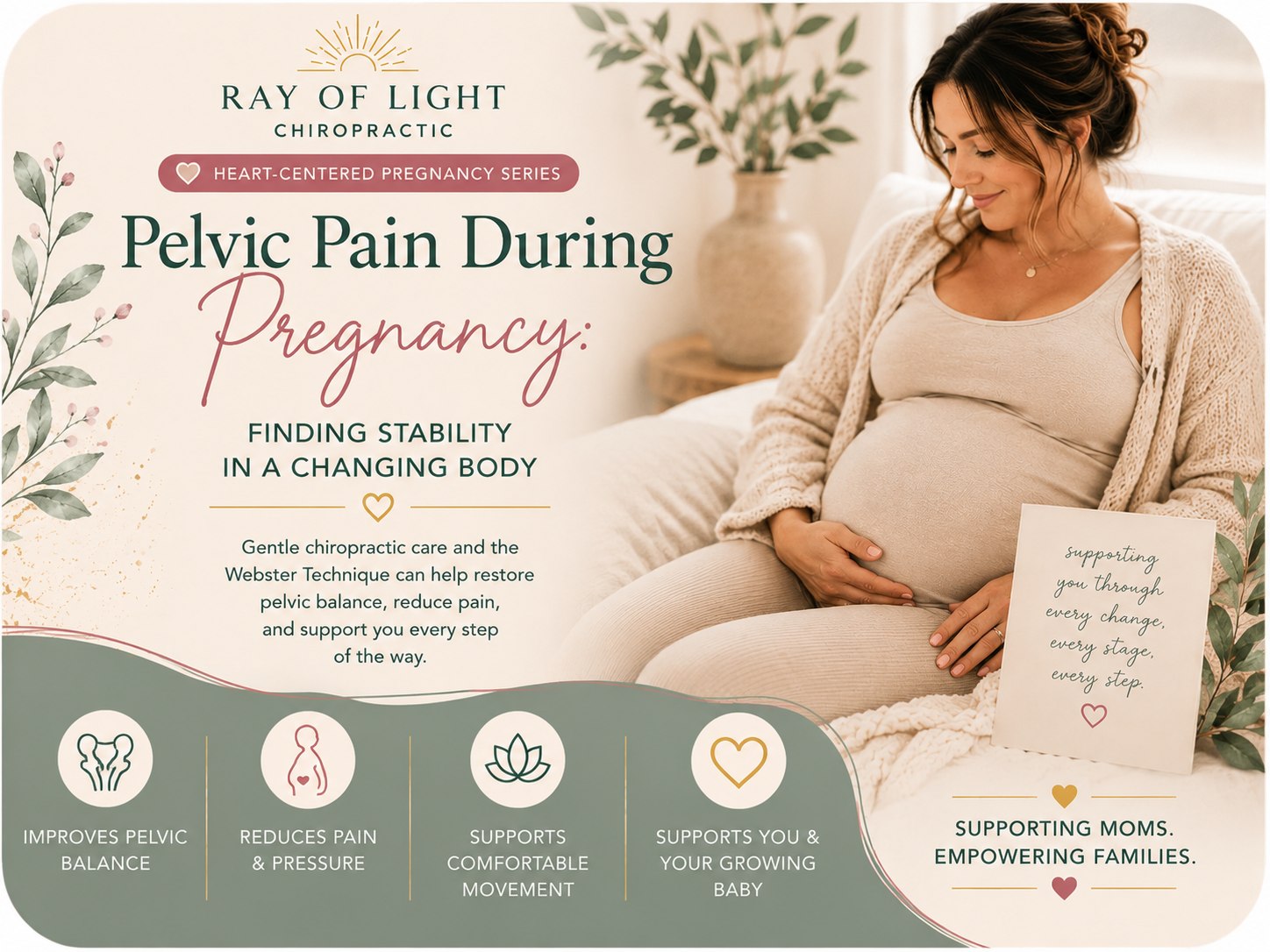
Pelvic Pain During Pregnancy: Finding Stability in a Changing Body
August 17, 2026
Heart-Centered Pregnancy Series
Pregnancy is a season of incredible transformation.
As your baby grows, your body adapts in remarkable ways to support and protect new life. But sometimes those changes can create unexpected discomfort—especially in the pelvis.
If simple movements like walking, climbing stairs, turning over in bed, or getting out of the car have suddenly become painful, you’re not imagining it.
And you’re certainly not alone.
Pelvic pain is one of the most common musculoskeletal complaints during pregnancy, affecting women in every trimester. While it may be common, that doesn’t mean you should simply “push through it.”
Your body is asking for support.
What Pelvic Pain During Pregnancy May Feel Like
Pelvic discomfort can show up differently for every woman.
You may experience:
- Pain or pressure at the pubic bone
- Aching through the hips or buttocks
- Groin discomfort
- Clicking or popping sensations in the pelvis
- Difficulty standing on one leg
- Pain when rolling over in bed
- Discomfort when walking, climbing stairs, or getting dressed
Some women are diagnosed with Symphysis Pubis Dysfunction (SPD) or Pelvic Girdle Pain (PGP), while others simply notice increasing instability as pregnancy progresses.
Regardless of the label, the experience can feel frustrating, exhausting, and sometimes even discouraging.
Why Pelvic Pain Happens During Pregnancy
Your pelvis serves as the foundation for your growing baby.
Throughout pregnancy, several changes occur simultaneously:
- Hormones soften ligaments and joints
- Your center of gravity shifts forward
- Body weight increases
- Muscles adapt to changing demands
- Previous injuries may become more noticeable
- Baby’s position influences pelvic mechanics
These changes are normal and necessary.
However, when one side of the pelvis begins moving differently than the other, increased stress can develop in the joints, muscles, and supporting ligaments.
The result is often pain, tension, and instability.
The Hidden Cost of Pelvic Imbalance
Many women assume pelvic pain is simply something they must endure until delivery.
But pelvic discomfort often affects much more than physical movement.
It can impact:
- Sleep quality
- Exercise routines
- Daily activities
- Energy levels
- Emotional well-being
- Confidence in your changing body
When every movement requires extra effort, even simple tasks can begin to feel overwhelming.
The good news is that support is available.
How Prenatal Chiropractic Care Supports the Pelvis
Prenatal chiropractic care focuses on helping the body adapt more comfortably to the physical demands of pregnancy.
Using gentle, pregnancy-specific techniques, chiropractic care can help improve motion and balance throughout the pelvis and surrounding structures.
When pelvic mechanics improve, many women experience reduced stress on the joints, muscles, and ligaments that support pregnancy.
This may help decrease:
- Joint irritation
- Muscle guarding
- Tension patterns
- Pelvic stress
- Movement restrictions
Many mothers report easier walking, improved sleep, and greater comfort during daily activities after receiving care.
Understanding the Webster Technique
One specialized approach often used during pregnancy is the Webster Technique.
The Webster Technique focuses on reducing tension within the sacrum and the surrounding muscles and ligaments connected to the pelvis.
Rather than forcing movement, the goal is to encourage balance and optimal function throughout the pelvic region.
When the pelvis functions more efficiently, both mother and baby can benefit from a more balanced environment.
The Pelvic Floor Connection
Your pelvic floor does important work throughout pregnancy.
These muscles support your growing baby, help maintain stability, and prepare for birth.
What many women don’t realize is that pelvic floor function is closely connected to pelvic alignment.
When the pelvis becomes strained or imbalanced, the pelvic floor often responds by tightening, compensating, or working harder than necessary.
When the pelvis is functioning more optimally, these muscles can often perform their job with less stress and tension.
Gentle Ways to Support Your Pelvis at Home
While professional care can be helpful, small daily habits can also make a meaningful difference.
Keep Your Knees Together
When getting in and out of bed or the car, move both legs together whenever possible.
This reduces strain on the pubic joint.
Consider a Pregnancy Support Belt
A maternity support belt may provide additional stability and comfort during daily activities.
Sleep With Strategic Support
Place a pillow between your knees and another beneath your belly if needed to reduce stress on the pelvis while sleeping.
Avoid Uneven Weight Bearing
Try sitting down to get dressed rather than balancing on one leg.
Keep Moving Gently
Walking, stretching, and movement within your comfort level can help maintain mobility and circulation.
Listen to your body and avoid pushing through sharp pain.
The Emotional Side of Pelvic Pain
Pelvic pain can be surprisingly emotional.
Many women feel frustrated when their bodies no longer move the way they once did.
Others feel guilty for needing more help or needing to slow down.
If this is your experience, please hear this:
Needing support does not mean your body is weak.
It means your body is working incredibly hard.
Growing a baby requires constant adaptation, and sometimes those changes create challenges that deserve care and attention.
You do not have to navigate them alone.
When to Contact Your Healthcare Provider
While pelvic discomfort is often related to pregnancy changes, it’s important to speak with your healthcare provider if you experience:
- Severe or rapidly worsening pain
- Vaginal bleeding
- Regular contractions
- Sudden swelling
- Loss of fluid
- Any symptoms that concern you
Always trust your instincts and seek medical evaluation when needed.
A Grounding Thought
Your pelvis is the foundation of your pregnancy.
When that foundation feels supported, balanced, and cared for, the rest of your body often feels more secure as well.
You deserve to move through pregnancy with as much comfort, confidence, and ease as possible.
Ready to Find Relief?
If pelvic pain is limiting your ability to enjoy your pregnancy, we’re here to help.
At Ray of Light Chiropractic, we provide gentle prenatal chiropractic care, including the Webster Technique, to help restore balance, improve comfort, and support you throughout every stage of pregnancy.
Book your appointment today and discover how much better your body can feel when it has the support it deserves.
Schedule your visit with Ray of Light Chiropractic Online Here
Topsfield, MA
978-887-9889
Frequently Asked Questions About Pelvic Pain During Pregnancy
Is pelvic pain normal during pregnancy?
Yes. Pelvic pain is one of the most common musculoskeletal complaints during pregnancy. As your body adapts to a growing baby, changes in hormones, posture, weight distribution, and ligament flexibility can all contribute to discomfort in the pelvis.
What does pelvic girdle pain feel like during pregnancy?
Pelvic girdle pain (PGP) can feel like aching, pressure, sharp pain, clicking, or instability around the pubic bone, hips, groin, buttocks, or lower back. Many women notice discomfort when walking, climbing stairs, getting dressed, or turning over in bed.
What is Symphysis Pubis Dysfunction (SPD)?
Symphysis Pubis Dysfunction (SPD) occurs when the joint at the front of the pelvis becomes irritated or moves unevenly. It can cause pain in the pubic bone, groin, hips, or inner thighs and often makes everyday movements more difficult.
Can chiropractic care help with pelvic pain during pregnancy?
Many pregnant women seek prenatal chiropractic care to help improve pelvic mobility, reduce muscle tension, and support overall comfort throughout pregnancy. Gentle pregnancy-specific techniques may help decrease stress on the joints, muscles, and ligaments surrounding the pelvis.
What is the Webster Technique?
The Webster Technique is a specialized chiropractic analysis and adjustment designed specifically for pregnancy. It focuses on reducing tension in the sacrum and surrounding soft tissues to help promote balance and optimal pelvic function.
Can pelvic pain affect my sleep?
Absolutely. Many women find that pelvic pain makes it difficult to find comfortable sleeping positions, especially during the second and third trimesters. Proper pillow support, pregnancy-specific positioning, and addressing pelvic tension may help improve sleep quality.
Does pelvic pain mean something is wrong with my baby?
In most cases, no. Pelvic pain is typically related to the physical changes occurring in your body rather than a problem with your baby. However, any severe, sudden, or concerning symptoms should always be discussed with your healthcare provider.
Can a pregnancy support belt help pelvic pain?
Many women find that a maternity support belt provides additional stability and reduces strain on the pelvis during daily activities. Every pregnancy is different, so it’s important to find the option that feels most supportive for your body.
When should I call my healthcare provider about pelvic pain?
Contact your healthcare provider if your pain becomes severe, suddenly worsens, is accompanied by bleeding, contractions, loss of fluid, fever, or any symptoms that concern you.
Will pelvic pain go away after pregnancy?
For many women, pelvic discomfort improves significantly after delivery as hormones normalize and pressure on the pelvis decreases. However, if symptoms persist postpartum, chiropractic care and pelvic floor support may help promote recovery.