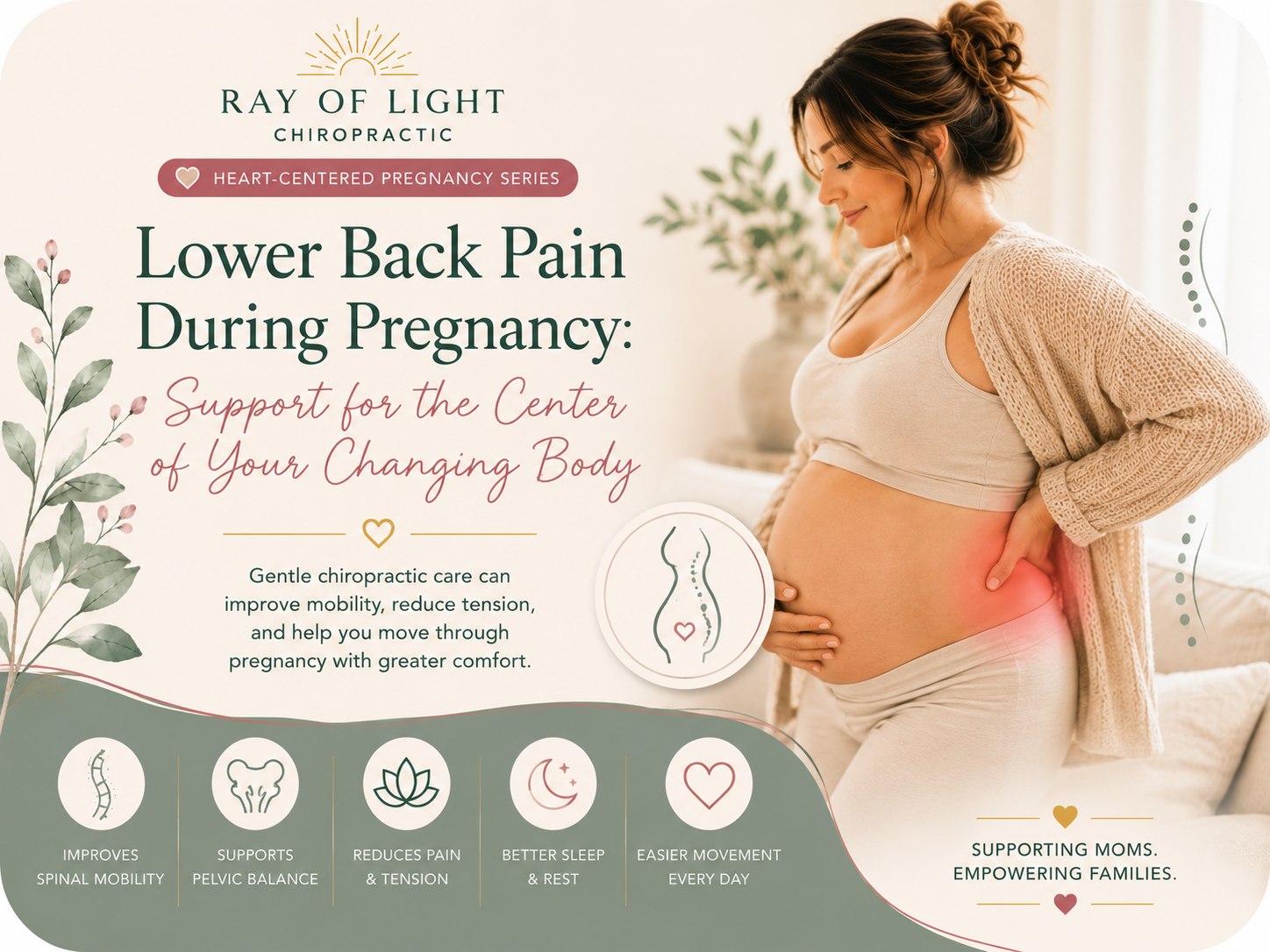
Lower Back Pain During Pregnancy: Support for the Center of Your Changing Body
August 17, 2026
Heart-Centered Pregnancy Series
Lower back pain is one of the most common experiences during pregnancy.
For some mothers, it feels like a dull ache at the end of a long day. For others, it can be sharp, persistent, and exhausting—making it difficult to sleep, exercise, work, or enjoy the experience of pregnancy the way they hoped.
If you’re experiencing lower back pain during pregnancy, you are far from alone.
And perhaps more importantly, you do not simply have to “push through it.”
While some discomfort can be a normal part of pregnancy, there are safe, gentle ways to support your body and help you move through this season with greater comfort and confidence.
Why Lower Back Pain Happens During Pregnancy
Pregnancy asks your body to adapt in extraordinary ways.
As your baby grows, your muscles, joints, ligaments, and nervous system are constantly adjusting to support the changing demands placed upon them.
Several factors contribute to lower back pain during pregnancy:
- Increased lumbar curve
- Weight gain
- Relaxed ligaments due to pregnancy hormones
- Reduced abdominal support
- Pelvic imbalance
- Changes in posture
- Altered walking patterns
- Muscle fatigue
These changes are normal.
The challenge is that normal doesn’t always mean comfortable.
As your center of gravity shifts forward, the muscles of the lower back often have to work harder to keep you balanced. Over time, this can create tension, stiffness, and discomfort throughout the low back and pelvis.
How Pregnancy Changes Your Posture
One of the biggest contributors to lower back pain is the way pregnancy naturally changes posture.
As your belly grows, your body adapts to maintain balance.
Many women notice:
- Increased arching of the lower back
- Tightness in the hip flexors
- Forward shifting of the pelvis
- Changes in walking mechanics
- Increased pressure through the sacroiliac joints
These adaptations help your body accommodate your growing baby, but they can also place additional strain on the structures of the lower back.
Think of it like carrying a backpack on the front of your body all day long.
Your muscles constantly adjust to keep you upright.
Eventually, they become tired.
Common Symptoms of Lower Back Pain During Pregnancy
Lower back pain can present differently for every mother.
Some of the most common symptoms include:
- Aching across the low back
- Pain after standing for long periods
- Difficulty sleeping comfortably
- Tight hips
- Pain radiating into the buttocks
- Morning stiffness
- Increased discomfort after activity
- Fatigue through the lower back and pelvis
For some women, symptoms remain mild.
For others, they can significantly affect daily life.
The Sacrum: The Foundation of Your Spine
A structure that deserves special attention during pregnancy is the sacrum.
The sacrum is a triangular-shaped bone located at the base of the spine, nestled between the pelvic bones.
It serves as the foundation of the spinal column.
As pregnancy progresses, the sacrum experiences increasing demands from:
- Changes in weight distribution
- Hormonal ligament relaxation
- Pelvic movement
- Baby positioning
When the sacrum becomes restricted or loses optimal motion, surrounding muscles often tighten in response.
This can contribute to:
- Lower back pain
- Hip discomfort
- Pelvic tension
- Difficulty walking comfortably
Supporting healthy sacral function is often an important part of helping pregnant women feel their best.
The Connection Between the Pelvis and Lower Back
The lower back and pelvis are closely connected.
When one area is stressed, the other often compensates.
For example, if the pelvis becomes imbalanced, the muscles of the lower back may work harder to stabilize the body.
Likewise, tightness in the lower back can influence how the pelvis moves and functions.
This is one reason why pregnancy-related lower back pain is rarely just a “back problem.”
It is often part of a larger pattern involving the spine, pelvis, muscles, ligaments, and nervous system.
How Chiropractic Care May Help During Pregnancy
Prenatal chiropractic care focuses on helping the body move and function more comfortably throughout pregnancy.
At Ray of Light Chiropractic, gentle pregnancy-specific techniques are used to support mobility, alignment, and nervous system function without forceful twisting or uncomfortable positioning.
Areas commonly addressed include:
- Lumbar spine mobility
- Sacroiliac joint function
- Pelvic balance
- Hip mobility
- Muscle tension patterns
Many women report improvements in:
- Lower back discomfort
- Sleep quality
- Daily movement
- Overall comfort
- Ability to stay active
Every pregnancy is unique, and care is always tailored to the individual.
Understanding the Webster Technique
The Webster Technique is one of the most commonly requested chiropractic techniques during pregnancy.
This specialized chiropractic analysis and adjustment focuses on reducing tension within the pelvis, sacrum, and surrounding soft tissues.
Contrary to common misconceptions, the Webster Technique is not a method used to “turn babies.”
Instead, its goal is to help improve pelvic balance and function.
When the pelvis is functioning optimally, many women report greater comfort throughout pregnancy.
Because the pelvis serves as the foundation of movement, improvements here can often influence the entire body—including the lower back.
Simple Ways to Support Your Lower Back at Home
Professional support can be valuable, but small daily habits can also make a meaningful difference.
Sleep on Your Side
Side-lying positions with supportive pillows can help reduce strain on the lower back and pelvis.
Many women find relief by placing pillows:
- Between the knees
- Under the belly
- Behind the back
Practice Gentle Pelvic Tilts
Pelvic tilts can help improve mobility and reduce stiffness in the lower back.
Slow, controlled movement is often most effective.
Stay Active
Movement is one of the best things you can do for your body during pregnancy.
Activities such as:
- Walking
- Prenatal yoga
- Swimming
- Gentle stretching
may help reduce stiffness and support overall comfort.
Lift Carefully
When lifting objects, bend through the knees rather than the waist whenever possible.
Avoid twisting while carrying weight.
Apply Heat
Warm compresses can help relax tight muscles and provide temporary relief from discomfort.
Preparing for Birth and Postpartum Recovery
Many women focus on getting through pregnancy but forget that their body is also preparing for life after birth.
Lower back function matters during:
- Labor positioning
- Delivery
- Feeding
- Babywearing
- Lifting and carrying your newborn
Supporting pelvic and spinal mobility now may help you feel more prepared for the postpartum season ahead.
When your body moves well during pregnancy, recovery often feels more manageable afterward.
The Emotional Side of Persistent Pain
Pain affects more than the body.
When discomfort becomes constant, it can impact:
- Mood
- Energy
- Sleep
- Confidence
- Emotional well-being
Many women begin questioning whether their body is handling pregnancy “correctly.”
If that thought has crossed your mind, please hear this:
Your body is not failing you.
Your body is adapting.
Sometimes adaptation creates tension that deserves support.
Needing help does not mean something is wrong.
It means you are carrying something precious.
When Should You Contact Your Healthcare Provider?
While lower back pain is common during pregnancy, some symptoms should always be evaluated by your healthcare provider.
Contact your provider if you experience:
- Severe or sudden pain
- Numbness or weakness
- Fever
- Loss of bladder or bowel control
- Vaginal bleeding
- Contractions
- Symptoms that feel unusual or concerning
Trust your instincts.
If something feels different, seek medical guidance.
A Heartfelt Reminder
Your back is supporting the weight of something extraordinary.
Every day, your body is growing, adapting, protecting, and nurturing new life.
That work deserves support.
You deserve support.
Pregnancy may ask a great deal of your body, but you do not have to carry the entire burden alone.
A Gentle Invitation
If lower back pain is making pregnancy feel harder than it needs to, we’re here to help.
At Ray of Light Chiropractic in Topsfield, Massachusetts, we provide gentle prenatal chiropractic care, including the Webster Technique, to help mothers feel more comfortable, balanced, and supported throughout pregnancy.
Whether you’re in your first trimester or counting down the days until you meet your baby, we’d be honored to be part of your journey.
Start your care journey today and experience a more comfortable, supported pregnancy.
Schedule your visit with Ray of Light Chiropractic Online Here
Topsfield, MA
978-887-9889
Frequently Asked Questions About Lower Back Pain During Pregnancy
Is lower back pain normal during pregnancy?
Yes. Lower back pain is one of the most common pregnancy symptoms. Changes in posture, weight distribution, hormones, and pelvic mechanics can all contribute to discomfort.
When does lower back pain usually start during pregnancy?
Some women experience back pain during the first trimester, but it becomes more common during the second and third trimesters as the baby grows and posture changes become more pronounced.
Why does my lower back hurt more at night?
Fatigue, prolonged standing, muscle tension, and the physical demands of the day often make symptoms more noticeable in the evening.
Can pregnancy cause sciatica?
Pregnancy can contribute to irritation of the sciatic nerve, which may cause pain, tingling, or discomfort that travels into the hips, buttocks, or legs.
Can chiropractic care help lower back pain during pregnancy?
Many pregnant women seek prenatal chiropractic care to improve mobility, reduce muscle tension, and support overall comfort throughout pregnancy.
What is the Webster Technique?
The Webster Technique is a specialized chiropractic analysis and adjustment designed specifically for pregnancy. It focuses on improving pelvic balance and reducing tension in the surrounding muscles and ligaments.
What sleeping position is best for lower back pain during pregnancy?
Most women find side-lying positions with supportive pillows between the knees and beneath the belly to be the most comfortable.
Can walking help lower back pain during pregnancy?
For many women, gentle walking can improve circulation, mobility, and muscle function, which may help reduce stiffness and discomfort.
When should I call my healthcare provider about back pain?
Contact your provider if you experience severe pain, numbness, weakness, fever, contractions, vaginal bleeding, or symptoms that feel unusual or concerning.
Will lower back pain go away after pregnancy?
For many women, lower back discomfort improves significantly after delivery as posture, hormone levels, and pelvic mechanics begin returning toward their pre-pregnancy state.