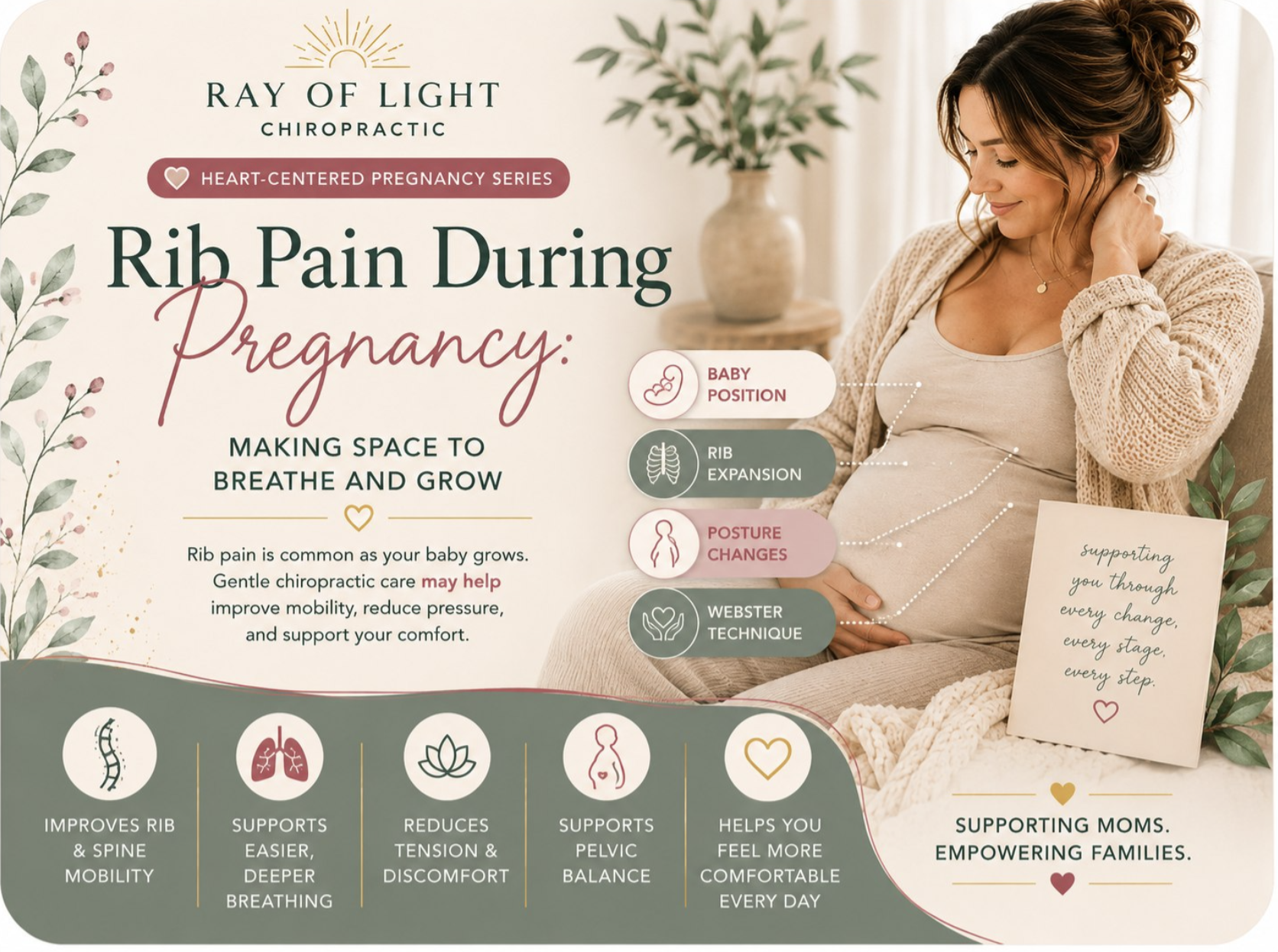
Rib Pain During Pregnancy: Why It Happens and How Chiropractic Care May Help
August 17, 2026
Pregnancy is a remarkable journey of growth and transformation. As your baby develops, your body continuously adapts to create space, provide support, and prepare for birth.
One of the more surprising discomforts many expectant mothers experience is rib pain during pregnancy. Whether it feels like a sharp ache beneath your bra line, soreness under your breasts, tenderness when taking a deep breath, or even discomfort from tiny feet pressing into your ribs, rib pain can make everyday activities feel challenging.
The good news? Rib discomfort is incredibly common, especially during the second and third trimesters. Understanding why it happens—and knowing what options are available for relief—can help you feel more comfortable as your pregnancy progresses.
Is Rib Pain Normal During Pregnancy?
Yes. For many women, rib pain is a normal part of pregnancy.
As your baby grows and your uterus expands, your body makes significant structural changes to accommodate both mom and baby. These changes can place increased pressure on the rib cage, diaphragm, spine, and surrounding muscles.
While rib pain can sometimes feel alarming, it is often a sign that your body is doing exactly what it was designed to do: making room for your growing baby.
Why Rib Pain Happens During Pregnancy
Several factors contribute to pregnancy-related rib discomfort.
Your Rib Cage Expands
Many women are surprised to learn that the rib cage actually widens during pregnancy.
As your uterus grows upward, your ribs naturally flare outward to create additional space. This expansion places stress on the muscles, ligaments, and joints connecting the ribs to the spine and breastbone.
Hormones Relax Ligaments
Pregnancy hormones—particularly relaxin—help prepare the body for birth by loosening ligaments and connective tissues.
While this increased flexibility is helpful for labor, it can also create instability in the rib joints and surrounding structures, leading to soreness or irritation.
Changes in Posture
As your center of gravity shifts forward, your posture changes to compensate.
Many pregnant women develop:
- Increased upper back rounding
- Forward shoulder positioning
- Increased low back curvature
- Tightness through the mid-back
These postural adaptations can contribute to rib cage tension and discomfort.
Your Baby Is Growing Upward
During the third trimester, your baby occupies more space within the uterus.
As the uterus rises, it pushes upward against the diaphragm and lower ribs. This pressure can create sensations of tightness, aching, or difficulty taking a full breath.
Common Symptoms of Rib Pain During Pregnancy
Pregnancy-related rib pain can feel different for every woman.
You may experience:
- Pain beneath one or both breasts
- Tenderness along the rib cage
- Sharp discomfort with deep breathing
- Pain while sitting for long periods
- Mid-back tightness
- Soreness along the bra line
- Discomfort when rolling over in bed
- Pressure from baby’s kicks
- Rib pain on one side of the body
Some women describe the sensation as a dull ache, while others experience intermittent sharp or stabbing discomfort.
When Baby’s Position Plays a Role
One of the most common causes of rib pain late in pregnancy is simply your baby’s position.
As babies grow larger and stronger, they begin exploring their environment with enthusiastic stretches, kicks, and pushes.
If your baby settles high in the uterus, those little feet may repeatedly press into the ribs.
While uncomfortable, these movements are often reassuring signs of healthy fetal activity and development.
Many mothers notice that rib pain changes throughout the day depending on their baby’s position and activity level.
The Connection Between Pelvic Balance and Rib Discomfort
The body functions as an interconnected system.
When the pelvis becomes imbalanced, it can influence how the uterus sits within the body. This may affect the amount of pressure placed on one side of the rib cage versus the other.
A tilted pelvis can contribute to:
- Uneven pressure through the abdomen
- Asymmetrical baby positioning
- Increased rib discomfort on one side
- Added strain on the spine and diaphragm
Supporting pelvic balance often helps improve overall comfort throughout pregnancy.
How Chiropractic Care May Help Rib Pain During Pregnancy
Prenatal chiropractic care focuses on helping the body move and function as comfortably as possible throughout pregnancy.
At Rol Chiropractic, gentle pregnancy-specific chiropractic techniques are designed to support proper movement and alignment without forceful twisting or uncomfortable positioning.
Areas often addressed include:
Thoracic Spine Mobility
The thoracic spine forms the attachment point for the ribs.
Restricted movement in this region can contribute to rib irritation, muscle tension, and upper back discomfort.
Rib Joint Function
Each rib connects to the spine through small joints that can become stiff or irritated during pregnancy.
Restoring healthy motion may help reduce discomfort and improve breathing mechanics.
Diaphragm Mobility
The diaphragm works continuously throughout pregnancy to support breathing.
As upward pressure increases, tension can develop around its attachments to the rib cage and spine.
Pelvic Alignment
Improving pelvic balance may help reduce compensatory tension throughout the entire body, including the ribs and mid-back.
Webster Technique and Pregnancy Comfort
Dr. Laura utilizes the Webster Technique, a specialized chiropractic analysis and adjustment designed specifically for pregnancy.
The goal of the Webster Technique is to help optimize pelvic balance and reduce tension within the surrounding muscles and ligaments.
When the pelvis functions more efficiently, some women notice improvements in overall comfort, including reduced asymmetrical pressure throughout the abdomen and rib cage.
At-Home Strategies for Rib Pain Relief During Pregnancy
While chiropractic care may help address underlying mechanical stress, several simple strategies can provide additional comfort at home.
Change Positions Frequently
Remaining in one position for extended periods can increase pressure on irritated ribs.
Try:
- Standing up regularly
- Taking short walks
- Switching sitting positions often
- Using supportive cushions
Rest on Your Side
Side-lying positions often reduce pressure on the rib cage.
Supportive pillows between the knees, under the belly, and behind the back can improve comfort.
Open the Chest
Gentle stretches that encourage chest expansion may reduce tension in the ribs and upper back.
Focus on slow, comfortable movement rather than aggressive stretching.
Apply Warm Compresses
Heat can help relax tight muscles surrounding the ribs.
A warm compress or heating pad on a low setting may provide temporary relief.
Lean Away from the Painful Side
If discomfort is concentrated on one side, gently leaning away from that side can create additional space and reduce pressure.
Practice Deep Breathing
When breathing feels restricted, the body often becomes more tense.
Slow, controlled breathing may help:
- Relax the nervous system
- Improve rib mobility
- Reduce muscle guarding
- Increase overall comfort
When Should You Contact Your Healthcare Provider?
While most rib pain during pregnancy is musculoskeletal and related to normal physical changes, certain symptoms should be evaluated promptly.
Contact your healthcare provider if you experience:
- Severe or sudden rib pain
- Chest pain
- Difficulty breathing
- Significant shortness of breath
- Severe headache
- Swelling of the hands or face
- Visual changes
- Pain that feels unusual or concerning
Always trust your instincts. If something feels different or worrisome, seek medical guidance.
A Gentle Reminder for Expectant Mothers
Pregnancy asks your body to do extraordinary things.
Your ribs expand. Your organs shift. Your posture changes. Your baby grows stronger every day.
Even when the stretching and pressure feel uncomfortable, they are often signs of the incredible adaptations your body is making to nurture new life.
You do not have to simply suffer through the discomfort, though. Support is available, and small changes can often make a meaningful difference.
Frequently Asked Questions About Rib Pain During Pregnancy
When does rib pain usually start during pregnancy?
Rib pain most commonly develops during the second and third trimesters as the uterus expands and places greater pressure on the rib cage and diaphragm.
Can my baby kicking cause rib pain?
Yes. As babies grow larger, their feet may press directly into the ribs, creating localized discomfort or soreness.
Is rib pain a sign of labor?
Generally, no. Rib pain is usually related to postural changes, rib expansion, and baby positioning rather than labor.
Can chiropractic care help rib pain during pregnancy?
Many pregnant women seek chiropractic care to improve mobility in the spine, ribs, pelvis, and surrounding muscles. Improved movement may help reduce tension and discomfort.
What sleeping position is best for rib pain during pregnancy?
Side-lying positions with supportive pillows are often most comfortable and can reduce pressure on the ribs and abdomen.
Should I worry about rib pain during pregnancy?
Most rib pain is normal, but severe pain, chest pain, breathing difficulties, swelling, headaches, or sudden symptoms should be evaluated by your healthcare provider.
Find Relief from Pregnancy Rib Pain in Northampton, MA
You don’t have to spend the rest of your pregnancy wincing with every breath, struggling to find a comfortable position, or feeling limited by rib discomfort.
At Rol Chiropractic in Topsfielld, MA, Dr. Laura Godfrey provides gentle prenatal chiropractic care designed to support your changing body throughout pregnancy. Through specialized pregnancy-focused techniques, including the Webster Technique, our goal is to help you move more comfortably, breathe more freely, and enjoy your pregnancy with greater ease.
Schedule your prenatal chiropractic appointment today and discover how comfortable pregnancy can feel.
Schedule your visit with Ray of Light Chiropractic Online Here
Topsfield, MA
978-887-9889
Frequently Asked Questions About Rib Pain During Pregnancy
Is rib pain normal during pregnancy?
Yes. Rib pain is a very common pregnancy symptom, especially during the second and third trimesters. As your uterus expands and your baby grows, your rib cage, diaphragm, muscles, and connective tissues all adapt to create additional space.
When does rib pain usually start during pregnancy?
Many women begin noticing rib discomfort during the second trimester, but it often becomes more noticeable during the third trimester as the baby grows larger and occupies more space within the uterus.
Why do my ribs hurt more on one side?
Rib pain is often worse on one side because of your baby’s position, pelvic alignment, posture, or muscle tension patterns. Some babies naturally prefer resting toward one side, creating more pressure on a specific area of the rib cage.
Can my baby’s kicks cause rib pain?
Absolutely. As babies grow stronger, their feet may press directly into the ribs, causing soreness, tenderness, or sharp discomfort. While uncomfortable, these movements are often a sign of healthy fetal activity.
Why does it hurt when I take a deep breath?
As the uterus expands upward, it can place pressure on the diaphragm and surrounding rib structures. Tight muscles, restricted rib movement, and postural changes can also make deep breathing feel uncomfortable.
Can chiropractic care help rib pain during pregnancy?
Many pregnant women seek prenatal chiropractic care to improve mobility in the ribs, spine, pelvis, and surrounding muscles. Improved movement and balance may help reduce tension and discomfort throughout the rib cage.
What is the Webster Technique?
The Webster Technique is a specialized chiropractic analysis and adjustment designed specifically for pregnancy. It focuses on improving pelvic balance and reducing tension in the surrounding muscles and ligaments, which may help support overall comfort throughout pregnancy.
What sleeping position is best for rib pain during pregnancy?
Most pregnant women find side-lying positions with supportive pillows to be the most comfortable. Pillows placed between the knees, behind the back, and beneath the belly can help reduce pressure on the ribs and improve alignment.
Are there stretches that can help rib pain during pregnancy?
Gentle chest-opening stretches, upper back mobility exercises, and breathing-focused movements may help reduce tension in the ribs and surrounding muscles. Always check with your healthcare provider before beginning any new exercise routine during pregnancy.
When should I contact my healthcare provider about rib pain?
Contact your healthcare provider if you experience:
- Severe or sudden rib pain
- Chest pain
- Difficulty breathing
- Significant shortness of breath
- Severe headache
- Swelling of the hands, face, or feet
- Vision changes
- Any symptoms that feel unusual or concerning
Will rib pain go away after pregnancy?
For most women, rib pain improves significantly after delivery as the uterus decreases in size, pressure on the rib cage is reduced, and posture gradually returns to normal. If discomfort continues postpartum, additional evaluation and support may be helpful.